THE WHAT
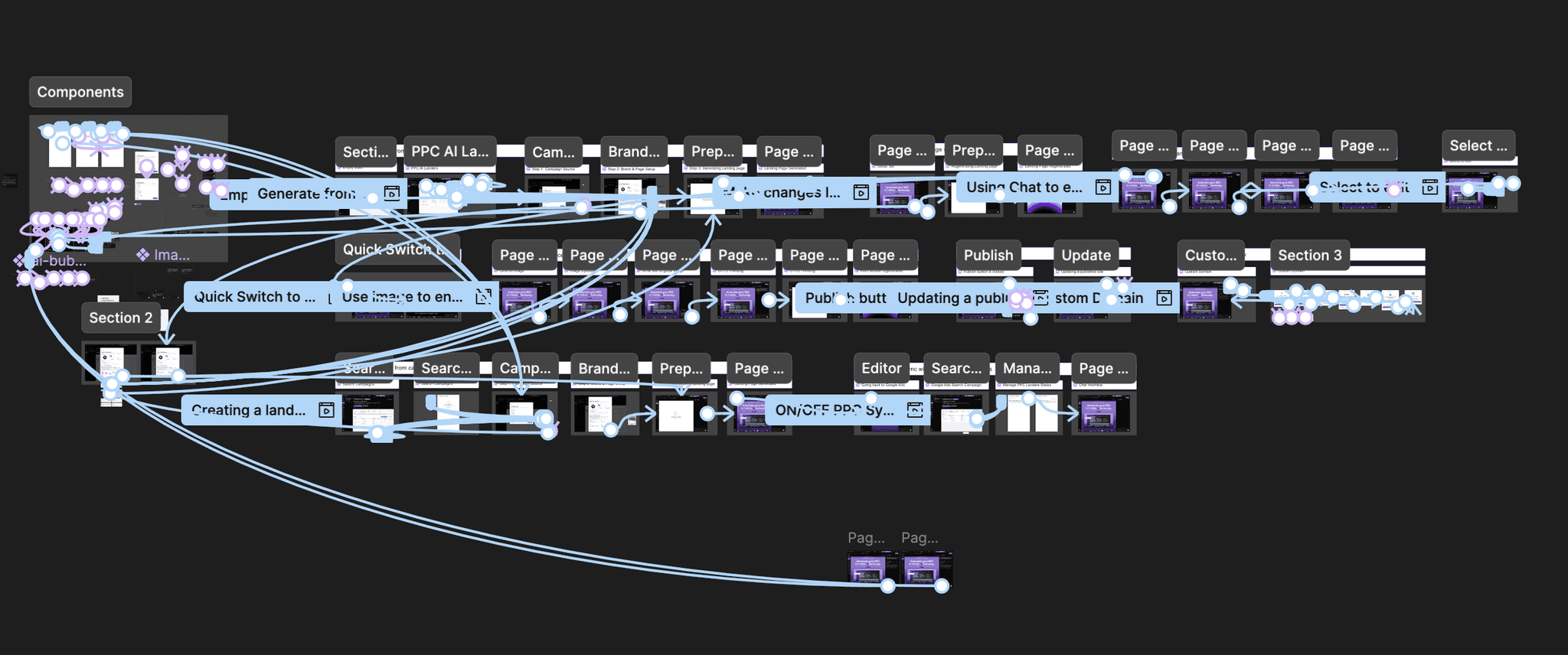
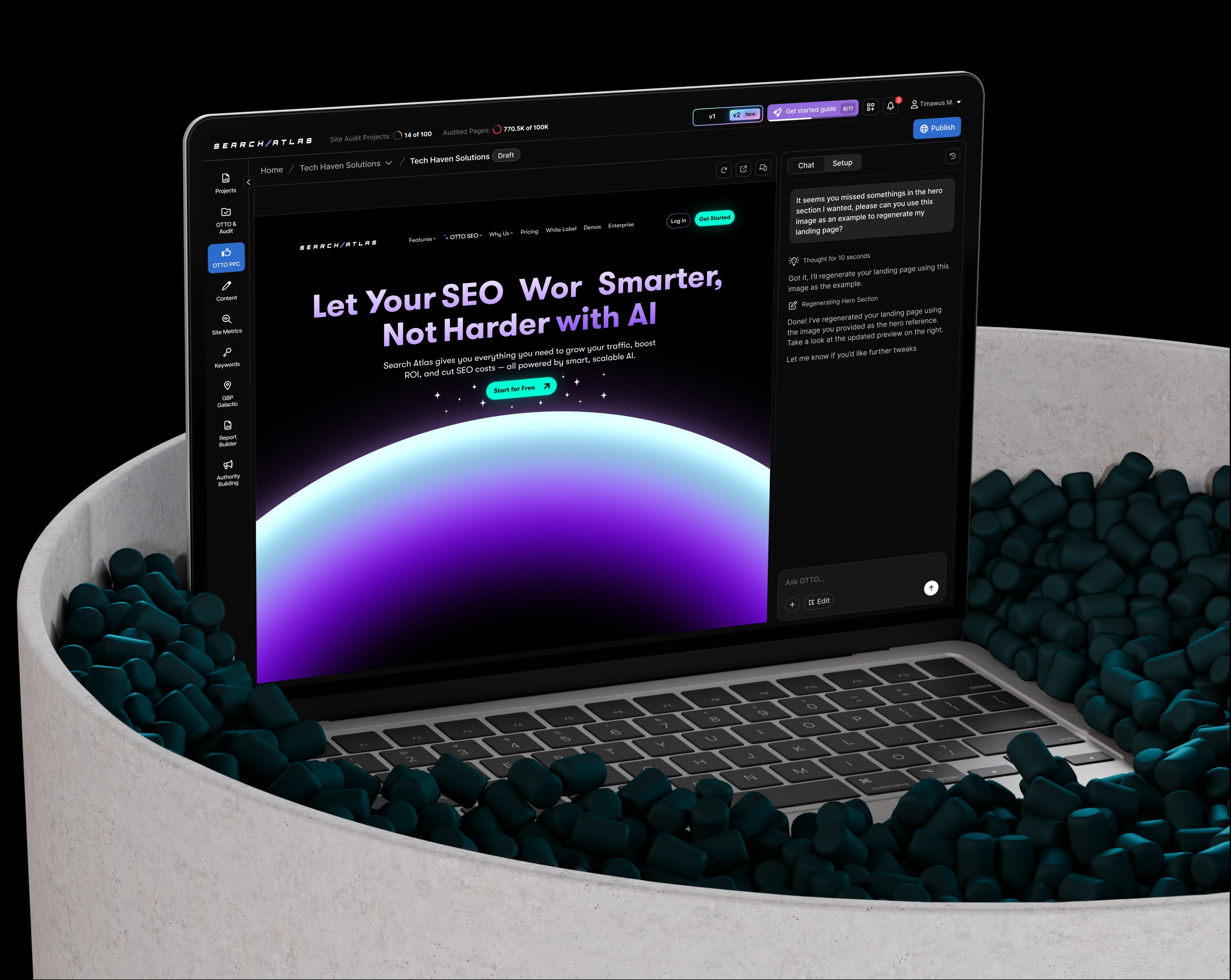
This project focused on rethinking how marketers create and manage PPC landing pages. The goal was to simplify what used to take hours connecting ad campaigns, generating multiple landers, and syncing them with live ads into a streamlined AI-powered experience that delivers results in minutes.
THE CHALLENGE
Existing PPC tools were fragmented users had to switch between ad managers, builders, and analytics dashboards. Marketers struggled to maintain consistency across ads and landing pages, often losing time in setup and revisions. The challenge was to build a unified system that automates creation, connection, and syncing without sacrificing customisation. Some other challenges Include:
Manual workflows causing friction.
Non-intuitive user journey between ads and pages.
No visual link between campaign data and generated landers.
THE BIG PLAN
To achieve a frictionless experience, I defined principles around clarity, automation, and control.
Automation: AI suggests layouts and content dynamically.
Feedback Loops: Inline states (editable, syncing, published).
Visual Language: Familiar PPC structure (campaign → ad group → page).
Scalability: Component system built for future AI modules (keyword clustering, smart variations).
RESEARCH ADVENTURES
Through user interviews and audit sessions with agency teams, we discovered that 80% of their campaign time was lost during setup and page revisions. Most wanted a “guided builder” that automates connections but still lets them tweak creative and layout.
70% wanted auto-sync between campaign URLs and landers.
60% valued editable AI content over static templates.
50% requested built-in testing (A/B previews).
I made sure every detail was historically accurate but also visually compelling — because why not learn in style?
THE DESIGN
The final product was built around clarity and control:
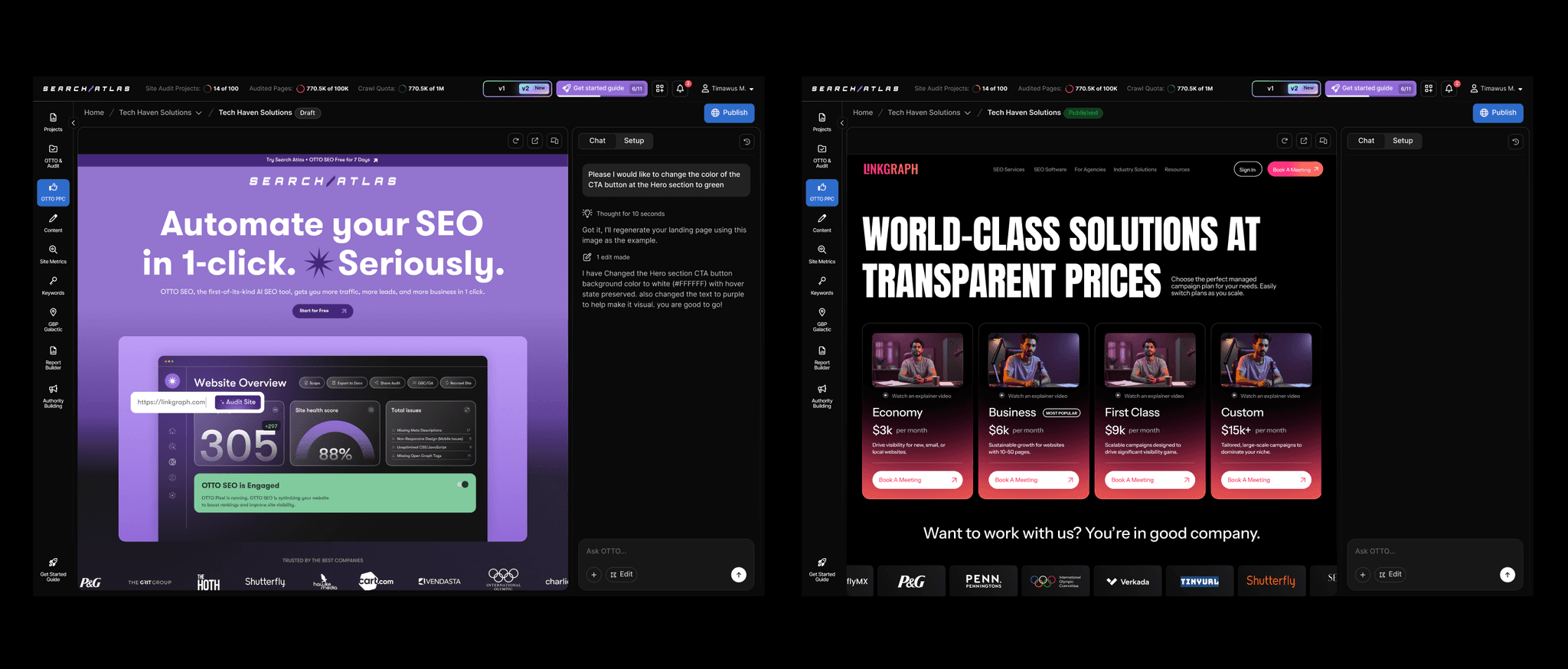
1. One Lander per Campaign: AI auto-generates and syncs a single, editable page.
2. Clear Sync Control: The toggle (“Sync PPC lander with campaign”) visually shows what’s connected.
3. Editable Base Model: Users can modify content, structure, or visuals in one place without affecting data integrity.
4. Smart Publish States: Inline feedback banners indicate whether the page is live, syncing, or in draft.
PROTOTYPE
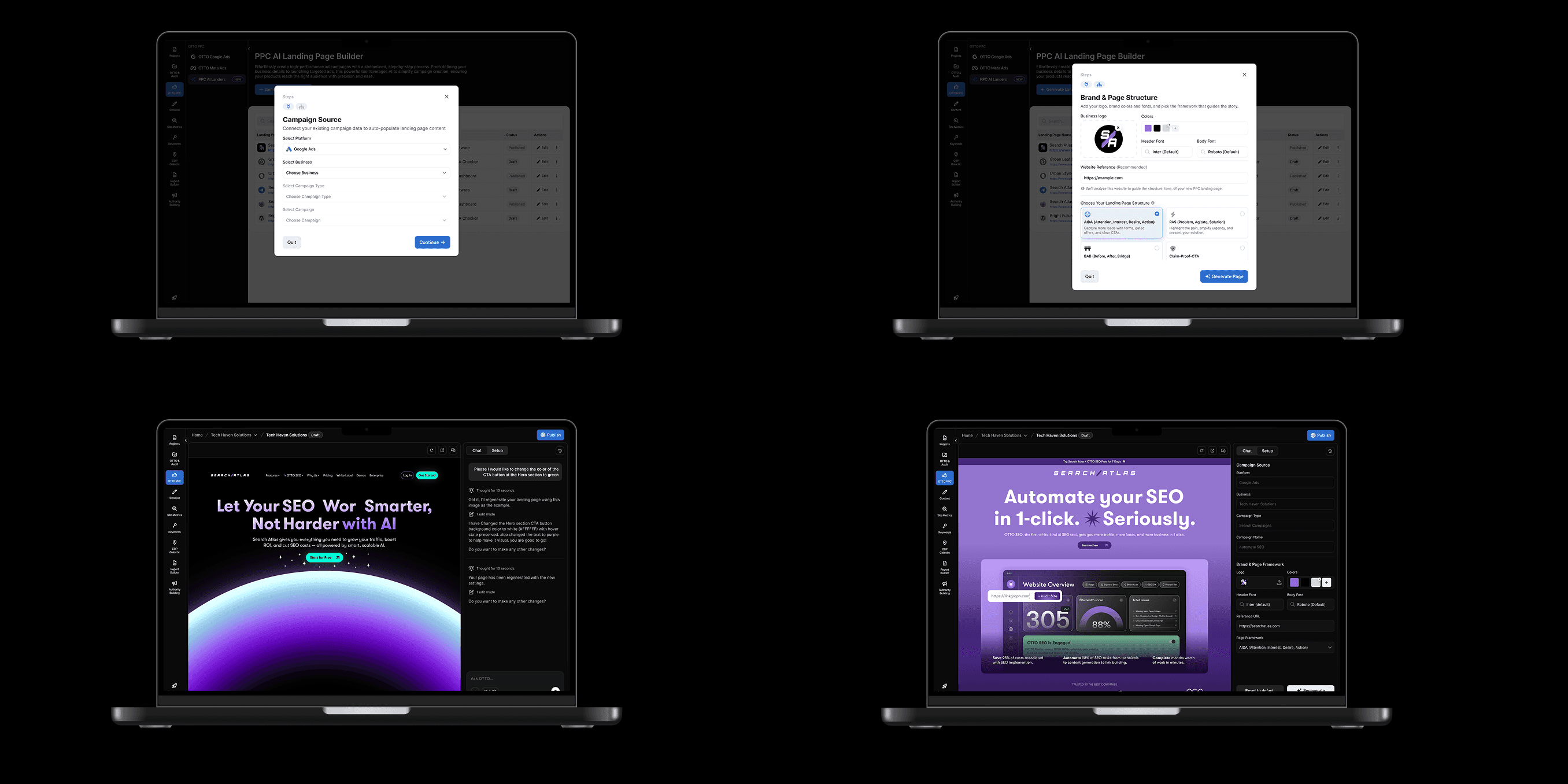
I whipped up an interactive prototype that let users hop from country to country like a 1975 globetrotter. Animations? Check. Smooth transitions? Double check. An experience that makes you say, "I didn't know history could be this fun!" — mission accomplished.